
I have always loved learning things, and in particular, I have always loved reading. My parents used to tell me that ever since I could walk, I wouldn’t be seen anywhere without a book under each arm. By the time I was five, I was in the top reading group at school, reading well above my age level, and by the time I finished primary school, I was top in English, grammar, science, and maths and was (informal) Dux of my primary school (my teacher and headteacher told both me and my parents this, but actually she decided to formally award Dux to another girl in my class – who cheated at maths – because my class teacher didn’t like my handwriting! I am still bitter about it to this day, especially when people always compliment me on my handwriting…. Oddly enough, this was repeated later on with my Master’s degree – I was marked by two markers as having passed with Distinction, but then unexplainedly demoted by a third marker to a Merit despite my work having been graded ‘Excellent’ all down my marking sheet. Yeah, cheers for that. I wasn’t even allowed to appeal. Huh. Apparently, there were ‘too many’ Distinctions that year so mine went down a league. Even now I can’t look at my Master’s certificate without feeling cheated. However, ‘we move’ – as the youngsters these days say. I’m just so happy I got my Master’s, especially not having done a full English undergraduate degree).

I knew when I started senior school that I wanted to study English at Uni when I finished school. It was always my strongest subject, closely followed by Biology. I wanted to spend my life researching books and writing about books, and lecturing people about books. I applied to Edinburgh and Glasgow Universities for their English Language and Literature degrees (as they were in those days) and got accepted by Glasgow but rejected by Edinburgh (which, incidentally, was my dream university). However, to cut a long story short, I eventually turned down my place at Glasgow; they had a scarcity of accommodation, and I would have needed to have commuted in every day from Edinburgh which really wasn’t feasible and would be expensive financially and time-wise. As it was too late by then to apply for a space on another course that year, I spent my Gap Year as a nursing assistant in a psychogeriatric ward in order to earn some money and ‘experience’ the world a bit. I ended up loving this so much that I decided to ditch applying again for English, and instead applied for a nursing degree at the university which was literally seven minutes’ walk from my home.
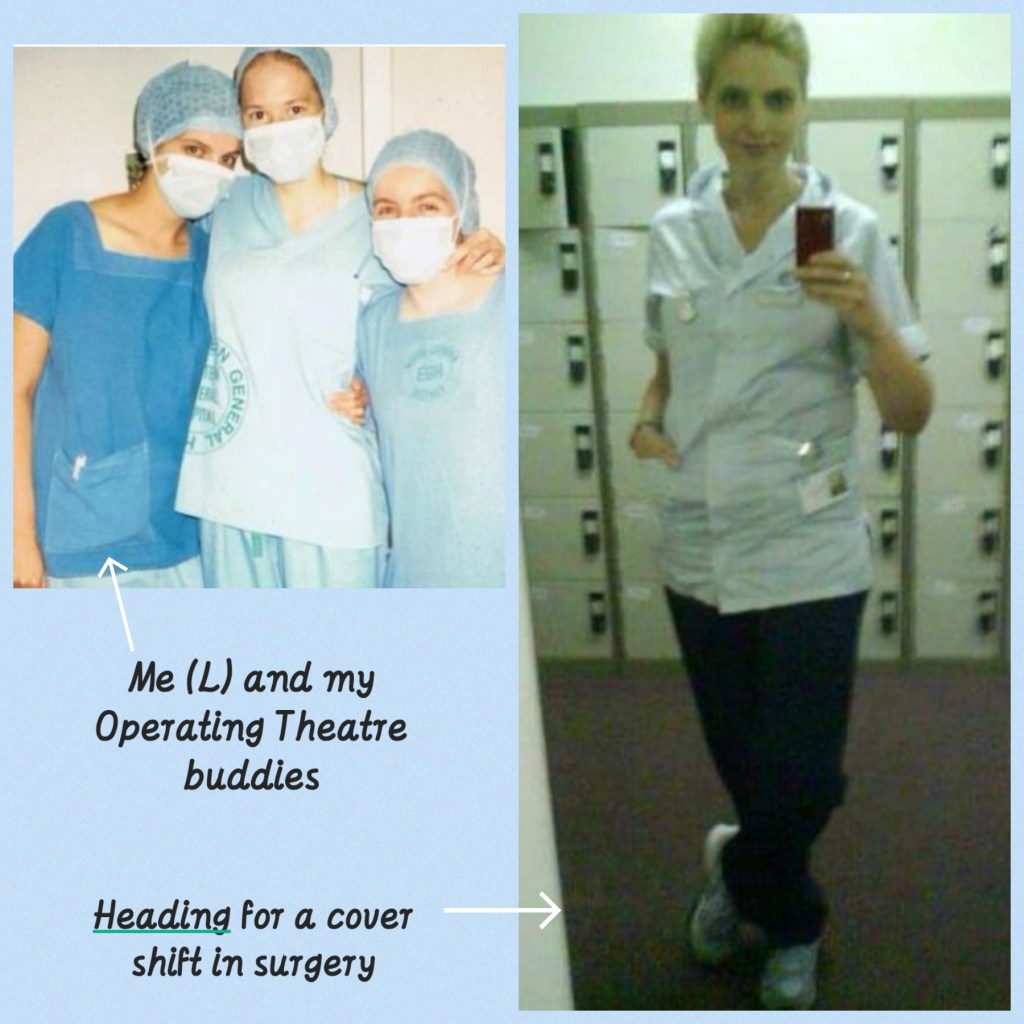
Fast forward sixteen years, and I had to medically retire from nursing due to my third cancer diagnosis. I loved my job – particularly in critical care – but there was no way I could continue. The long hours (usually working long shifts on days off too to cover for absent colleagues), minimal sleep between shifts, and the general low morale and excessive stress of the job took their collective toll on me. So, I had to think about what to do with my life. I was 41 years old – in my view, most people had their lives sorted by now, and here was me about to start from the bottom again. As my cancer treatment was lengthy and debilitating, one evening I made the bold move of enrolling on an undergraduate Open University English module (in the days you could just randomly apply to do any module you liked whether you were working for a degree or not). I was going to do this English study that I so desired when I was a teenager. I’ve written blogs on my Open Uni journey so won’t repeat myself suffice to say that I absolutely loved my studies so much that I enrolled on and completed a Master’s in English, also through the Open Uni. I have since been studying for my PhD at Edinburgh Uni (my dream university) where I am a-l-m-o-s-t finished writing my thesis. I have the best supervisor in the world and I am loving every minute of researching for my degree – well, mostly loving every minute. Let’s not gloss over the fact that it’s tough and there are days when impostor syndrome kicks in, self-doubt, and just general fed up-ness with my never-ending thesis.

I embarked on my part-time PhD when I was in my mid-40s, a time when my kids were all grown up and at Uni or finishing school and were increasingly independent. At the time, my parents were both well as was my mother-in-law, and circumstances seemed to continue as they had been throughout my Open Uni study. I had a wee office to hide away in every day at home (which I preferred to the open plan, distracting PhD office at the uni) – first year was a breeze. It was different though. I was the dinosaur of my cohort. It’s something I didn’t feel with online study as most people were about my age plus, learning remotely, you only really interact through formal forums or through dedicated Facebook groups. But I really noticed it on campus. The youngsters (all in their 20s) were all wanting to meet up to go out in the evenings, when I just wanted to go home, put my PJs on and just read with a hot chocolate. They’d all talk about their favourite music bands, and I’m thinking that I still remember the original version of the cover song they are talking about. Don’t get me wrong, they were (and are) a lovely bunch and never let me feel excluded, but when you feel that inside you are their age, but you’re actually not, it can be a little odd. I have to admit to feeling envious of those youngsters though and the fact that they were studying for their PhDs whilst they were in their 20s – they have a whole life ahead of them to follow their dreams, while I’m likely to be way too old by the time I finish mine to follow my own.
I presented my first conference at Oxford Uni in the late summer of 2018, and then – at the start of second year – everything seemed to go downhill. My Mum was misdiagnosed by her GP as having ‘swine flu’ but which, several months and a private CT scan later, turned out to be advanced metastatic breast cancer. Then my mother-in-law kept falling/fitting and going into hospital at six-weekly intervals. On top of this, my daughter was having a tough time with her mental health and, as a result of all of these, my PhD study took a major hit. I had to be daughter, daughter-in-law, and mother to these three women – there was no way I could focus on my studies. Any time I could focus, it was well into the evening – after tutoring my school students – when I was physically exhausted. So, on the advice of my supervisor, I took an interruption from my PhD study for 8 months. Being able to do take that break in order to be the supportive family member that I needed to be, was so great; by the time I returned to my studies just before Christmas 2020, things had calmed down – Mum’s cancer was being controlled well, mother-in-law had had her medication updated, and my daughter was at Uni (albeit under COVID lockdown). I felt mentally and emotionally ready to get going on my research again and so I set to on my second thesis chapter.
I had almost finished this when I needed to take another break a year later. Mother-in-law had fallen ill again on Boxing Day (from which she ultimately passed away two weeks later) and it was becoming more evident that Mum wasn’t going to be around much longer. The previous July we had received the news that her cancer had spread to her liver; by the December she was a skeleton of a lady and was really not well. So, I took another six months off so that I could spend Mum’s remaining weeks with her. She passed away at the end of February 2022. I was all for giving up my PhD then – I thought my supervisor would be frustrated with me, and fed up that I was still about, writing this magnum opus. I had had no focus for months and Mum’s passing hit me hard – reading anything was too much let alone books by my beloved Anthony Powell. I also thought of my full-time cohort, many of whom had already graduated while I am still stuck with only two out of three chapters written and no appetite to get back to it. But on the last day she had the ability to speak, Mum made me promise to see my studies through. She knew this was my dream degree, and she said she didn’t want her not being about to stop me finishing what I had started. So, I did promise her I would see it through – and I am, albeit at a pace akin to a snail as we now prepare our house for selling.
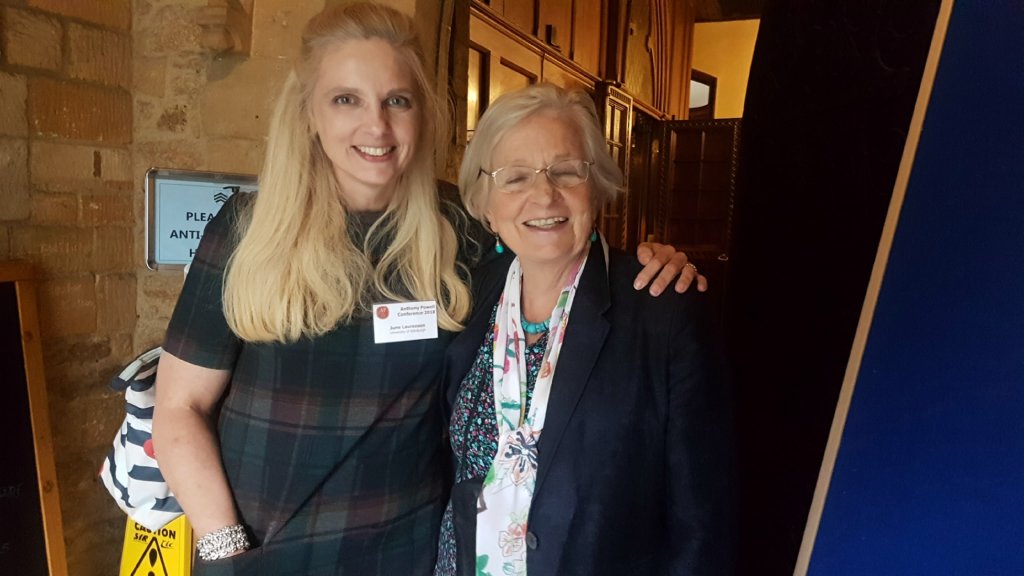
Taking breaks during such big projects is absolutely OK. Researching for a PhD is a lonely business – unlike a school or undergraduate/Master’s university class where you have course-mates studying the same things as you. Add on top of this family issues, personal health issues, or anything else, then your standard of work is going to suffer. When I started my studies, I was determined I would finish in four years. A super-fast part-timer. But, life threw the kitchen sink (and the toolbox) at me and here I am, about to start year six, still plodding on. I’ll get there. I’ll do it. But I want to be well in the process. I presented my second paper at a conference last summer and got such encouraging feedback from it, that I remembered just why I am doing this research in the first place. Although I have had to take time out, twice, I would rather submit a thesis that I loved doing and is my very best work rather than plough onwards and feel that I resented doing it every minute. I’ve invested time, money, and energy into this – I’m going to make it count even if it takes me that little bit longer.
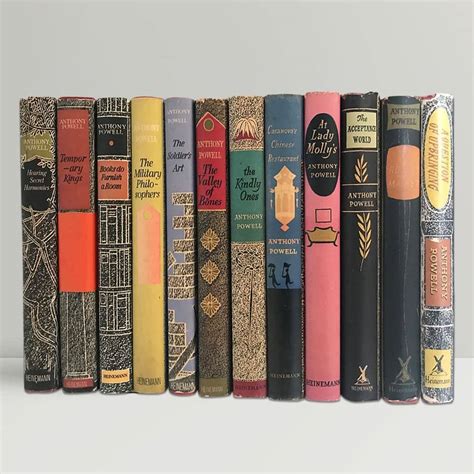
These are only some factors which make my PhD very important to me. Besides these, I love researching the author Anthony Powell (who, annoyingly, very few people have heard of) and finding brand new links that have not been connected before. I argue that he is just as effective a commentator of London society in the 1920s – 1970s as Charles Dickens was in the previous century. I have ambitions to teach a Powell course at the university – whether that be an evening class or by another means – and I have a post-doctoral research area all ready (if I am offered a place to study for this when I finish my PhD). My love of learning and reading that was part of my identity as a toddler still remains to this day.
This level of study does mean a lot of sacrifices – I am self-funding and so I have to pay the yearly fees, but my tutoring helps cover these. It means sacrificing some aspects of my free time or social life, but it is worth it. I am aiming to finish early 2024 – family health permitting. I want my almost 90-year old Dad to come to my graduation. I want to realise my teenage dream. The importance of my PhD to me is also because I’m not just doing it for me, or my late Mum, or indeed my family. I am also doing it for my supervisor (whose knowledge is inspiring), my friends at the Anthony Powell Society, (who have been so encouraging and informative), for my recently retired second supervisor, (who gave me such valuable feedback during the first two years of my studies), and also for Anthony Powell himself. Although he is no longer alive, I hope that my thesis will raise his profile a bit in the literary world so that more people can see for themselves the genius behind his writing.
 June's Jottings