
The usual pattern of conversation these days goes something like this…….
A.N.OTHER: “So, what is your PhD subject?”
ME: “I’m researching the Gothic and spatial theory in relation to Anthony Powell’s ‘A Dance to the Music of Time’ novels”.
A.N.OTHER: “Sorry, who? And what?”
Thus ensues the usual short explanation of who Powell was, a twentieth-century author, who wrote many novels which are often viewed as comedies of manners in mid to late twentieth century Britain. My research is concerned with the twelve novels which collectively make up his magnum opus ‘A Dance to the Music of Time’. And then I try and stutter through the spattering of spatial theory I have actually understood (which isn’t much) over the preceding few days.
Then comes the question: “Why did you decide to base your research on Anthony Powell?” This is an easy, yet hard question to explain.
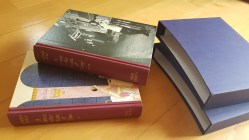
Just before I was diagnosed with my latest lot of cancer, I had taken some sick time off work, as I was in pain and feeling pretty poorly. To banish the boredom of lying in bed and to distract me from my symptoms, I read book after book. After having read ten in the first week, I decided I needed a nice thick tome to get my teeth into (I am a huge fan of big books), so I googled ‘the longest book in English’, and Powell’s ‘Dance’ series appeared near to the top of the results page, after Proust. Without hesitation, I downloaded the first three novels of the series onto my Kindle and from then my love of Powell began. Within 10 days, I had read all twelve!
What struck me about these novels? Well, this is where it gets tricky to explain. To me, the narrative evoked colours, so that while I was reading them, a huge oil painting was developing in my mind. Each character was a colour, each setting had its own hue. By the time I finished, I had this abstract mental image, richly coloured, in a circular pattern. I have synaesthesia (as I have blogged about here), and often see colour in music or words – their distinctiveness make some songs/musical pieces or books very memorable. But Powell’s novels went beyond that for some unexplainable reason; the experience of reading them making me feel like I didn’t ever want to stop as I would be unlikely ever to read anything like this again. It was like a form of literary sublime!
I was extremely interested to discover, in Powell’s journal, that he admitted to being a synaesthete, and I began to wonder if this was an underlying influence in his writing, which drew me to it:
“V and I were talking about someone (possibly Rimbaud) remarking that he saw letters of the alphabet in different colours. I said I did; V, uncertain herself, suggested I ought to  write down what these colours seem to me, so I do so: A, very dark red, almost black; B, very dark brown, almost black; C, light blue, almost grey; D, very dark blue; E, lightish brown; F, slightly lighter brown than E; G, about the same sort of brown as F; H, black; I, black; J, lightish brown; K, fairly light grey; L, darker grey; M, purplish red; N, brownish red; O, white; P, light green; Q, pale yellow; R, dark grey, almost black; S, darkish green; T, dark red; U, very light pale yellow; V, palish brown; W, darker brown; X, black; Y, lightish brownish yellow; Z, black”. (Tuesday, 10th June, 1986).
I have to say, compared those I ‘see’, the majority of Powell’s letters are very dark in colour and many are repeated. That could have been a PhD thesis right there, but it encroached too much into psychology, and I wanted to avoid that! I decided instead to focus on the darker ‘paint’ in my mental masterpiece: the more gothic strands to the series. I don’t want to give away too much on my public blog about my thesis – yet anyway – suffice to say that each re-reading of ‘Dance’ evokes different images and different colours that appear as a palimpsest painting. See what I mean about being hard to explain why? This hugely underrated author wrote more than just a ‘comedy of manners’, he wrote what I consider to be the best modernist/postmodernist (I can’t quite make out which) prose of the twentieth century, and my mission is to encourage more people to read it.
I would be interested to know if any other Powell scholars or ‘fans’ (apologies, I hate that word but it seems the best one to use in this situation) who are synaesthetes have the same experience as myself, and if it was this that attracted them to the ‘Dance’.
Cited work:
Powell, Anthony, Journals 1982 – 1986, (London: Arrow Books, 2015), p.245.
 Since I last blogged on this platform, many moons ago, a lot has happened. First of all, in November 2011, I was diagnosed with cancer for the third time, not lymphoma on this occasion, but breast cancer brought on from the radiotherapy I had had for the first lot of lymphoma 18 years previously! (You can read of my past cancer encounters
  my head was filled with cotton wool, and could barely think, let alone read. Couple this up with never-ending nausea (which made me lose so much weight that I ended up a UK size 4 at one stage), I was a mess. Thank goodness the OU modules were online, as I would have been in no physical or mental state to get to a brick University! So to get such high module results was a HUGE source of pleasure. (I had made a conscious decision NOT to tell the OU of my situation, as I wanted to challenge myself to do these courses on my own steam – and indeed my Master’s – without any extensions on my essays, or to be treated any differently from my course-mates). Because I was feeling so lousy and ‘spent’ all of the time, my blogging just stopped.
 Dickens is my very favourite nineteenth-century author. Again, my treatment was making things tough, as it had done since the beginning, but in the end I pulled through and submitted my work one month early. As it turned out, the last official day of my degree, in January 2017, was also my last day of treatment; that particular evening we had a double celebration! Eight weeks later, I found out that I finally had the permission to put the letters MA after my name…… I had passed my degree! A double victory!
 family commitments, partly because I am still recovering from Tamoxifen fog (which has vastly improved since January!), and partly because I am almost twice the age of my doctoral colleagues! I am involved in peer-reviewing and blogging for Uni magazines/sites, I’m a PhD reader for the Uni’s literary prize, and am about to set up a Twentieth Century Research Group with one of my colleagues. Life is really busy but is totally great, and is worth all of the horrid, painful, and depressing days that my treatment gave me.

 June's Jottings