

Anthony Powell, PhD

PhD chat: Why Anthony Powell?

The usual pattern of conversation these days goes something like this…….

A.N.OTHER: “So, what is your PhD subject?”

ME:  “I’m researching the Gothic and spatial theory in relation to Anthony Powell’s ‘A Dance to the Music of Time’ novels”.

A.N.OTHER: “Sorry, who? And what?”

Thus ensues the usual short explanation of who Powell was, a twentieth-century author, who wrote many novels which are often viewed as comedies of manners in mid to late twentieth century Britain. My research is concerned with the twelve novels which collectively make up his magnum opus ‘A Dance to the Music of Time’. And then I try and stutter through the spattering of spatial theory I have actually understood (which isn’t much) over the preceding few days.

Then comes the question: “Why did you decide to base your research on Anthony Powell?” This is an easy, yet hard question to explain.
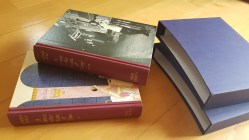
20170705_125239.jpg
Two Folio Society editions of ‘Dance’. I’m searching for the other two

Just before I was diagnosed with my latest lot of cancer, I had taken some sick time off work, as I was in pain and feeling pretty poorly. To banish the boredom of lying in bed and to distract me from my symptoms, I read book after book. After having read ten in the first week, I decided I needed a nice thick tome to get my teeth into (I am a huge fan of big books), so I googled ‘the longest book in English’, and Powell’s ‘Dance’ series appeared near to the top of the results page, after Proust. Without hesitation, I downloaded the first three novels of the series onto my Kindle and from then my love of Powell began. Within 10 days, I had read all twelve!

What struck me about these novels? Well, this is where it gets tricky to explain. To me, the narrative evoked colours, so that while I was reading them, a huge oil painting was developing in my mind. Each character was a colour, each setting had its own hue. By the time I finished, I had this abstract mental image, richly coloured, in a circular pattern. I have synaesthesia (as I have blogged about here), and often see colour in music or words – their distinctiveness make some songs/musical pieces or books very memorable. But Powell’s novels went beyond that for some unexplainable reason; the experience of reading them making me feel like I didn’t ever want to stop as I would be unlikely ever to read anything like this again. It was like a form of literary sublime!

I was extremely interested to discover, in Powell’s journal, that he admitted to being a synaesthete, and I began to wonder if this was an underlying influence in his writing, which drew me to it:

“V and I were talking about someone (possibly Rimbaud) remarking that he saw letters of the alphabet in different colours. I said I did; V, uncertain herself, suggested I ought to color-paint-palette-wall-paintingwrite down what these colours seem to me, so I do so: A, very dark red, almost black; B, very dark brown, almost black; C, light blue, almost grey; D, very dark blue; E, lightish brown; F, slightly lighter brown than E; G, about the same sort of brown as F; H, black; I, black; J, lightish brown; K, fairly light grey; L, darker grey; M, purplish red; N, brownish red; O, white; P, light green; Q, pale yellow; R, dark grey, almost black; S, darkish green; T, dark red; U, very light pale yellow; V, palish brown; W, darker brown; X, black; Y, lightish brownish yellow; Z, black”.  (Tuesday, 10th June, 1986).

I have to say, compared those I ‘see’, the majority of Powell’s letters are very dark in colour and many are repeated. That could have been a PhD thesis right there, but it encroached too much into psychology, and I wanted to avoid that! I decided instead to focus on the darker ‘paint’ in my mental masterpiece: the more gothic strands to the series. I don’t want to give away too much on my public blog about my thesis – yet anyway – suffice to say that each re-reading of ‘Dance’ evokes different images and different colours that appear as a palimpsest painting. See what I mean about being hard to explain why? This hugely underrated author wrote more than just a ‘comedy of manners’, he wrote what I consider to be the best modernist/postmodernist (I can’t quite make out which) prose of the twentieth century, and my mission is to encourage more people to read it.

I would be interested to know if any other Powell scholars or ‘fans’ (apologies, I hate that word but it seems the best one to use in this situation) who are synaesthetes have the same experience as myself, and if it was this that attracted them to the ‘Dance’.


Cited work:

Powell, Anthony, Journals 1982 – 1986, (London: Arrow Books, 2015), p.245.


Alternative About Me

The Way I See Things Is…..

I didn’t realise that I perceive the world in a different way to the majority of other people until fairly recently. I thought everyone saw colours in music and letters. I thought everyone could taste the flavour of names. And it never dawned on me that the “Average Joe” didn’t think of individual letters and numbers as each having a distinct personality. It was only after I made a comment about a certain piece of music being a certain colour that it was pointed out to me that evidently things were not perceived by others as they are by myself. “June, are you OK?” was the comment. Then I discovered this “thing” had a name. Synaesthesia. In Greek it means “a union of the senses”, and according to Scholarpedia, it affects 4% of the global population. It is not a neurological condition, but is often seen as a “gift” that only a few people can take advantage of. So in a way I’m kind of special – or so I like to think!
Trawling research on the web, there appears to be 54 types of synaesthesia, appearing equally in men and women. There are also suggestions of a family link. I have to admit as to not having read an abundance of material about it, but I seem to have several different synaesthetic experiences that occur in different ways in everyday life. Some people have asked me to share these, so here goes……and honestly, I am not mad!
Colour and Personality associations
I have always thought of days of the week as colours: Monday is Yellow; Tuesday is Orange; Wednesday Green; Thursday Purple; Friday Pink; Saturday Red and Sunday is Blue.
I have very strong likes/dislikes of colours, and have always liked Wednesdays the least, as I really don’t like green. Sometimes, without thinking about it, I will wear clothes whose colour corresponds to the day of the week – at least when that happens I don’t forget what day it is!
As well as days of the week having colours, individual letters and numbers have their own colours. This used to make spelling tests and maths a lot of fun when I was a child, as I seemed to form a rainbow of colours on the page when I wrote things down. To further complicate things, these individual letters and numbers each have a distinct personality as well….
NUMBER COLOUR PERSONALITY
1
Red
Fun, light-hearted
2
Blue
Naughty/mischievous
3
Yellow
Drunkard
4
Green
Elderly
5
Orange
Happy, slightly smug
6
Pink
Nervous/highly-strung. Easily scared
7
Purple
An Academic
8
Black
Banker
9
Brown
Bored teenager
0
Grey
Ghostly/shadowy
And the same with the alphabet whether in upper or lower case:
LETTER
COLOUR
PERSONALITY
A
Red
Perfectionist
B
Magenta
Shy
C
Orange
Lazy
D
Light blue
Easily bored
E
Yellow
Fitness freak
F
Indigo
Flippant
G
Silver
Self-confident
H
Dark Green
Earthy
I
Grey
Snob
J
Gold
Outgoing
K
Purple
Untidy
L
Pinky orange
Sleazy
M
Green
Bipolar/Moody
N
Dark Grey
Geeky
O
Peach
Singer
P
Beige
Rebellious
Q
Terracotta
Dependent
R
Olive Green
Adventurer
S
Dark blue
Jolly
T
Baby pink
Pretentious
U
Lilac
Caring
V
Dark red
Aristocratic
W
Pink
Excitable
X
Turquoise
Eccentric
Y
Amber
Introverted
Z
Black
Sad
Strangely enough, in my case, individual letters and numbers do not have their own tastes – whereas the words they form often do. More of that later.
I do have an irrational dislike to certain letters of the alphabet…. I would refuse to buy a used car if it had a P or U on its number plate. Unfortunately for me, the family car we currently have was sold to us with a temporary number plate on it – and when the original was put back on, it had a P among the letters. It may seem crazy, but it gets on my nerves!!!
Are you still with me? It gets better…….
Seeing sounds
When growing up, I wasn’t aware of this branch of my synaesthesia. Being a child and young adult who listened to 80s/90s pop chart music via the radio, this link was absent. Synthetic drum machine music didn’t evoke any colour associations; neither did Heavy Rock. In saying this, however, I do recall Nena’s song “99 red balloons” confusing me, as the song was yellow in my opinion. New Order’s “Blue Monday” definitely was not blue – it was an emerald green colour. It was not until I started listening to classical music that the whole kaleidoscopic spectrum of patterns made themselves evident. For instance: Taverner’s “The Lamb” and Vaughan-Williams’ “Fantasia on a theme of Thomas Tallis” are what I call sunset songs – when I hear them I visually see orange, golds, pinks and a hint of navy blue weaving mellow patterns in my mind. Paganini is a light blue, summer sky with wispy white clouds. Vaughan-Williams’ “The Lark Ascending” is a definite green piece – and because of its colour I don’t like it! Karl Jenkins Adiemus pieces are composed of most colours in darkened hues, but never black, with the odd slither of gold or silver. Beethoven’s music tends to be darker; Mozart produces playful pastel shades. Mussorgsky’s Pictures at an Exhibition is of the Cubism art genre with the three primary colours only featuring, in bold form. Einaudi is similar to Mozart – bright and pastel shades of the lighter colours in the spectrum, often in a gingham-style pattern. More on Einaudi later – he is more complicated! In fact, I cannot drive my car with classical music playing, or else I wouldn’t be able to “see” properly, and would likely end up in a crash!
Aside from classical music, the only other obvious colour – music synaesthetic experiences I have had have been whilst listening to the rock group Pink Floyd, which is interesting as the Founder of Pink Floyd, Syd Barrett, is thought to have been a synaesthete. The “Dark Side of the Moon” album is an extraordinary cacophony of pink, purple, burgundy and blue with other bold colours darting in and out of the patterns – but these colours are always blurred.
In an orchestra, groups of instruments emit different colours – I also tend to group them into temperature….don’t ask me why!
INSTRUMENT
COLOUR
TEMPERATURE/MOOD
Violin
Pale blue
Cool/lightweight, wispy
Cello/double bass
Brown
Tepid/Stark, earthy
Flute
Green
Cool/lush, damp
Oboe/clarinet/bassoon
Olive green – dark green
Cool/damp, dreary
Trumpet/trombone
Dark red – crimson
Warm/outgoing, self-important
French horn/tuba etc
Red
Cool/ sharp
Piano
Pastel shades/gingham pattern
Warm
Harp
Gold/orange
Warm/flowing
Xylophone
Silver
Cool/Sharp, frosty
Choral
Dark yellow/orange/pink
Warm
Guitar
Yellow
Warm/sunny
Seeing sound is an extremely relaxing and pleasant experience (unless one is driving) and I wish that everyone could share it. It’s like having your own son et lumiere show in your mind!
Tasting sounds
Tasting words and sounds doesn’t happen to me as much as the seeing sounds does. On listening to an Einaudi album recently, every piece tasted of a different pastry, cake and even lemon meringue pie! By the end of the album I felt as if I had eaten a whole baker’s shop, and didn’t want any lunch. That has not happened on any other classical album, yet, but it was pretty amazing at the time!
Names and how I experience them
My facebook and twitter pages are ablaze with sounds and tastes just by looking down my friends’ lists. Some names are tastes, some are sounds, some are moods or colours and some are objects. Some are pleasant, some are not. Most are rather silly and amusing. Here are some examples. If your name is among these, please do not be offended by how things appear to me – I can’t help it! (I’m picking names at random from friends’ lists here….).
The name Graham tastes of liver, whereas Lesley is freshly squeezed fruit juice. Lucy is a squeaky supermarket trolley wheel, Sheila has the sound of a lavatory flushing (sorry!). Emma is a misty summer morning at dawn, while Eve is a dark wintry evening round the fire. Steve is bass guitar, Sam is a tambourine. The name Dave conjures up corduroy material, whereas Darren is plastic and Emily is lace. There is no rhyme nor reason for these associations – it is how I experience the senses that make up the names. So if your name is Sarah, I would remember you as a hairbrush. See, I warned you some of them were ridiculous!
So, in a nutshell, that is my “take” on the world. I see all this as a positive thing – in fact, if my synaesthesia was somehow taken away from me, I would miss it hugely. I only wish more people could enjoy the world with this “extra sense” – it brings things into a whole new dimension. And no, I’m not mad!